s&box : Can lightning strike twice?
"This version of s&box will be the worst it will ever be."
That's not a dig. That's actually the most generous thing you can say about Facepunch's newly launched game making platform right now, because the alternative is far more damning. One week into launch, s&box is rough, confused about what it wants to be, and burning through the goodwill of the exact community it needs most. This isn't the first time Facepunch has had a rocky launch , many don't remember that before Rust became one of the most successful survival games ever made, it was a bit of a mess. The question isn't whether s&box can get better, I am sure in time it will. The real question is if it even matters.
s&box, Sandbox and sand in a box
Garry's Mod didn't set out to change gaming. It was a physics playground built on top of Half-Life 2, a "sandbox" tool to mess around with props, ragdolls, and the iconic gravity gun. While I can't speak for them, I can't imagine that Garry Newman expected his mod to create Trouble in Terrorist Town, DarkRP, or the thousands of community game modes that followed. They happened because the tools were open, the assets were there, and a passionate community figured out what to do with them. Garry's Mod became one of the most important UGC platforms in gaming history, entirely by accident.
But what really made Garry's Mod wasn't the tools. It was the people. The Garry's Mod community isn't a player base in any conventional sense. I’d say it's closer to a cult, and I mean that in the best possible way. These are people who met their closest friends on DarkRP servers at 2am. Developers who wrote their first lines of Lua code modifying a TTT gamemode and ended up building careers in the industry because of it. Server communities that have been running continuously for fifteen years, with their own hierarchies, traditions, and inside jokes older than some of their members. Garry Newman isn't just a developer to this community, he's something closer to a founding father. The Source engine aesthetic, the jank, the chaos, the gmod_legs and the prop surfing and the inexplicable ragdoll physics, all of it carries a weight of nostalgia and identity that goes far beyond a normal relationship with a game. This is devotion.
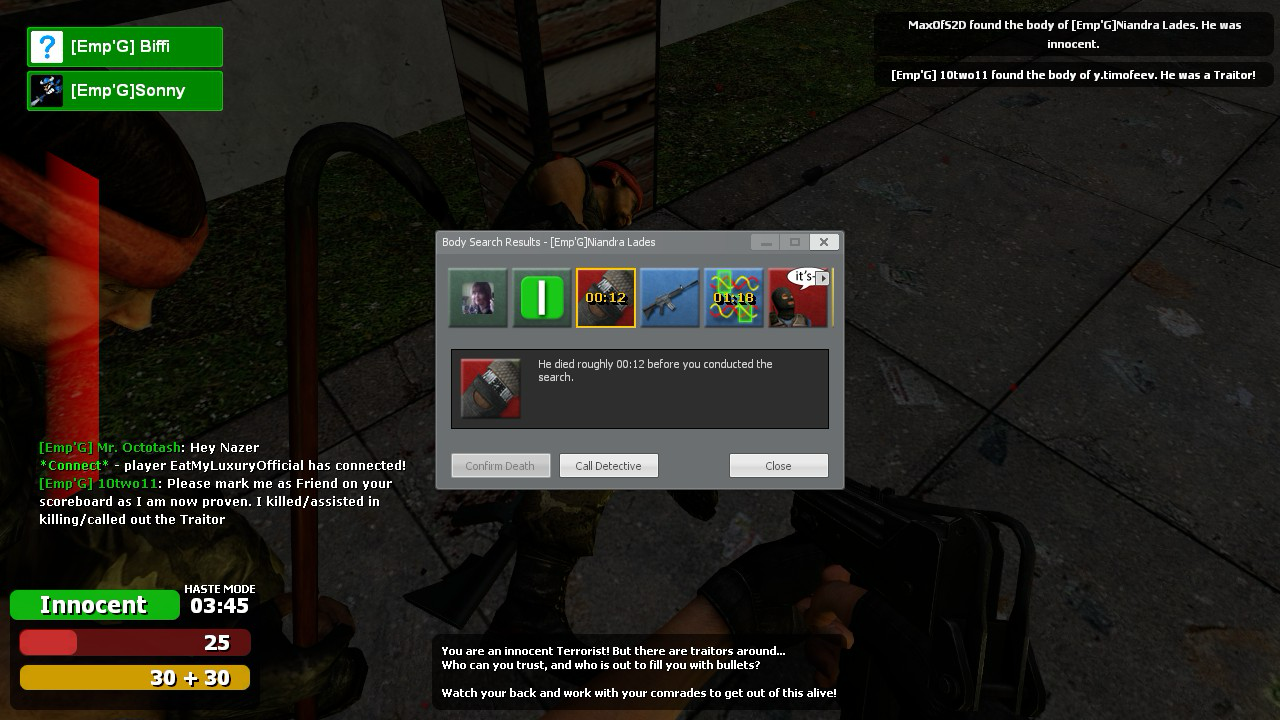
That devotion is worth understanding, because it explains everything about why S&box has landed the way it has. Because S&box is trying to do on purpose what Garry's Mod did without trying, and that is a fundamentally different challenge. And to their credit, Facepunch haven't hidden from that. Right there on the Steam page, in their own words: s&box is "our spiritual successor to Garry's Mod." They aren't being coy about what they're promising or who they're promising it to.
This isn't a story that started last week either. Garry Newman first mentioned a sequel in development back in 2015, with Facepunch officially unveiling s&box in 2017. By the time it launched on April 28th 2026, developers had been building inside it for the better part of five years. Five years of early access. Five years of community investment, tooling, and expectation-setting. The Garry's Mod community has been watching this entire time.
Now here's an important caveat. The hardcore Garry's Mod community, the developers, the server owners, the people with thousands of hours largely understand that s&box isn't Garry's Mod 2. They've followed the development closely enough to know what it is and isn't. But that vocal, informed minority are not the ones who are going to make or break this platform. The player base that Facepunch needs; the people who will buy it, browse the game library and stick around long enough for developers to earn from it are the much larger group who see "spiritual successor to Garry's Mod" on the Steam page and take it at face value. They are arriving with a very specific picture in their head. And what they find when they open s&box for the first time is something quite different.
What players get when purchasing and opening S&box is a library of community-made games. For developers, tucked behind the game browser, is a full game engine where they can build and potentially publish standalone games on Steam. It is, on paper, a genuinely ambitious proposition.
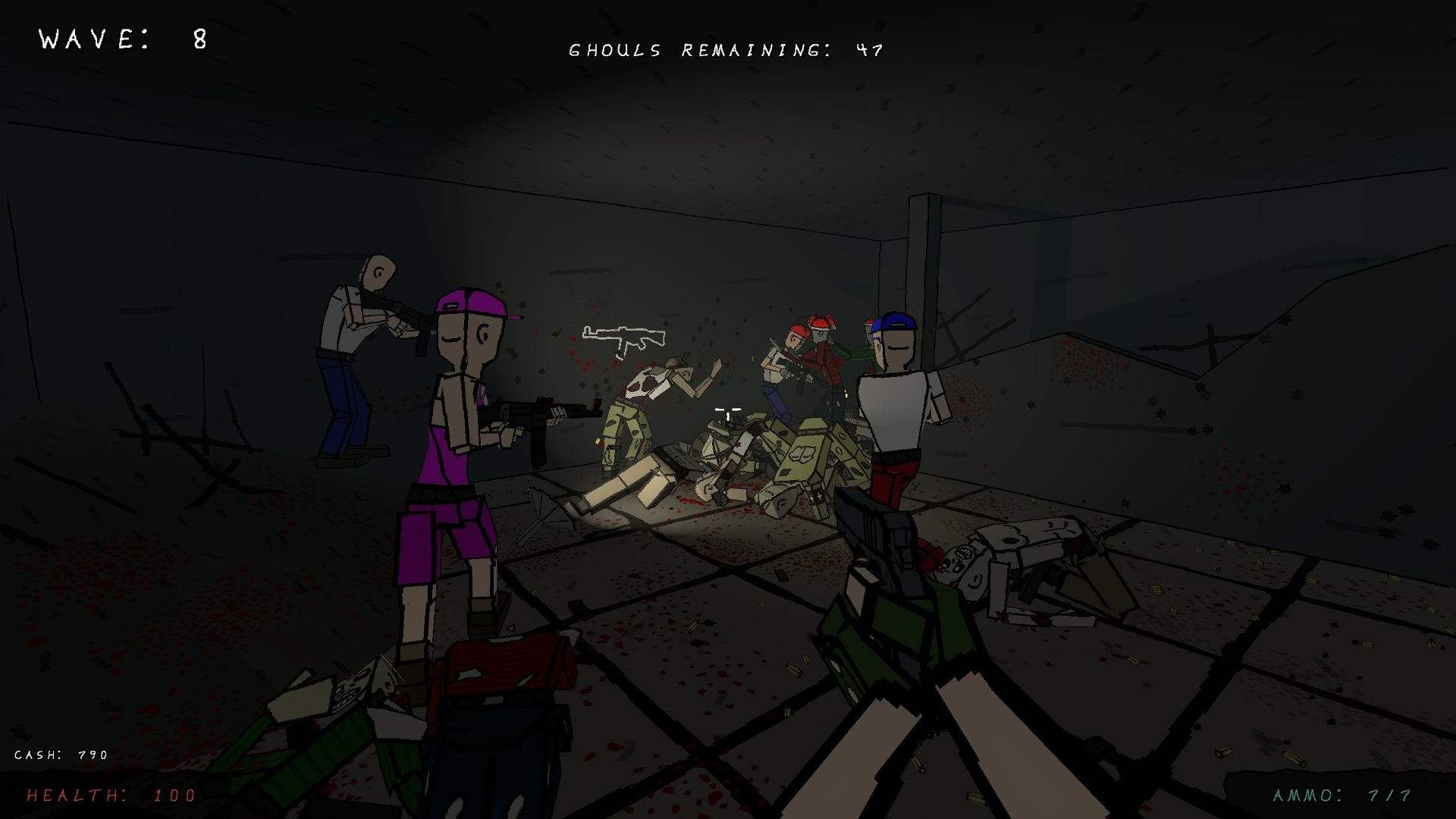
If this sounds familiar, that's because you almost certainly have seen it before in titles such as Roblox and Fortnite. In practice, what you actually find when you open s&box right now is a game browser that looks closer to a stripped-down Roblox lobby than a spiritual home for the Garry's Mod community. The most-played games on launch week include zombie shooters, AFK farming experiences, and simple survival games. Ghoul Grounds, one of the more polished offerings is a recreation of the original Call of Duty Zombies map, built with clear skill and passion. I want to be clear, when I saw Ghoul Grounds I was instantly impressed. The "MS Paint" art style was striking and the King of the Hill vibe was strong. But it also perfectly illustrates the problem: it's a visually impressive and competent imitation of a game most players already own, without the gunplay, the progression, or the years of refinement that made the original iconic. Why pay $20 to play a worse version of something you already have? A question that may have a straightforward answer at first but gets harder to answer the deeper you look into how s&box is built, funded, and positioned.
After five years of developer access, s&box launched to 46% positive reviews on Steam. - as of writing
What actually is this?
s&box has a bit of an identity problem. Not in the vague, hand-wavy way that gets thrown at every new platform that struggles to find its footing, but a specific, structural one. It is simultaneously trying to be three things: a spiritual successor to Garry's Mod, a competitor to Roblox and Fortnite's UEFN, and a fully featured game engine. On paper those goals might sound complementary. In practice, they pull in completely opposite directions, and right now I don't believe that s&box is convincing me of any of its goals.
While the claim that s&box is a direct successor to Garry's Mod is tenuous at best, it's something that they claim themselves on their own Steam page. The problems with that claim start immediately. What made Garry's Mod so endlessly replayable wasn't just the tools, it was how easy those tools were to build on top of. Running a community server with a custom twist meant modifying a few files, adding some addons, choosing a map. The barrier to entry was low enough that teenagers were spinning up DarkRP servers and building Trouble in Terrorist Town variants without any formal development background. s&box has actively moved away from that workflow. There is no easy way to modify existing games. No shared asset library to draw from. Unlike Garry's Mod, which launched with the entire Half-Life 2 asset catalogue baked in, props, maps, characters, sounds. s&box developers start from a near blank slate. Nearly everything has to be built from scratch or sourced elsewhere. For a community whose creativity was historically fuelled by having a rich sandbox of all the source game assets to play with, that is a significant loss that no amount of modern tooling fully compensates for.
A smart element to add here is that developers do have access to a library of assets at this stage, Facepunch has given developers the cloud asset library which includes first party models and animations. With the expectation that the community will add to this over time. What is interesting is that artists can earn from the assets they place in this library.
As a Roblox and Fortnite competitor, the challenge is different but equally steep. It starts with having some understanding of why these platforms actually work. Both Roblox and Fortnite are freely available on PC, Mobile and Console, once the platform is installed each game requires almost no download and puts thousands of different games or game like experiences in front of a receptive audience. This is added to the fact that Fortnite is a family friendly brand at this stage and while Roblox is constantly in the news for it's less than stellar reputation, it's making sweeping changes to gain respect from parents. Both platforms are extremely accessible which drives both players and aspiring developers to these platforms. For Roblox and Fortnite, they are able to bring people on through playing their games and convert a portion of these from players to developers which then provides more content to drive players.
In comparison, When a developer builds inside Fortnite, they have access to years of triple-A quality assets, thousands of character skins that players already own and are emotionally invested in, and a player base of over a million concurrent users already logged in and looking for something new to play. When a developer builds with the s&box editor they get none of that scaffolding. No existing player investment, no cross-platform accessibility and a limited asset library. It's a $20 PC-only download that opens into a near-blank slate. While I do believe that this s&box has the highest ceiling for the quality of games, it also asks the most from its developers.
What s&box does share with both platforms is their primary monetisation model, The PlayFund : an engagement based payout system where developers earn depending on how long players spend in their games. That's the same fundamental structure driving Fortnite's creator economy, and more recently a part of Roblox's too. It's a model with a well documented critique from its developer base; it rewards games that keep players engaged above everything else. Not well crafted games that bring players to the platform.
That confusion isn't just a PR problem. It has real consequences for who shows up, what they build, and whether any of it sticks.
A Game Engine That Isn't Ready To Be One
If the UGC platform pitch isn't landing, you might hope that s&box could at least win over developers on the strength of its engine. After all, the timing feels right. Unity severely damaged its reputation in 2023 with its disastrous runtime fee announcement and while they walked it back, the trust never fully recovered. Unreal Engine remains powerful but has the reputation of being overly bulky for smaller teams. The indie development scene has been quietly looking for alternatives. For many, including developers who started within UGC platforms, Godot has been that alternative. It has grown enormously but remains limited for large scale multiplayer projects. On paper, s&box is a modern C# game engine built on Source 2, open sourced under the MIT license, with integrated multiplayer and a direct pipeline to publish on Steam that's a genuinely compelling offer.
For the Source faithful specifically, it should have been irresistible. These are developers who grew up with the Hammer editor, who know the Source engine's quirks and limitations intimately, who have spent years dreaming of what those tools could look like rebuilt for a modern era. s&box was supposed to be that dream realised. A familiar foundation, modernised. s&box is a "love letter to source 2" remember.
The reality, according to developers who have spent years working inside it, is considerably more frustrating . For some in the community in particular, something closer to a betrayal.
The version of Source 2 inside s&box has been so heavily modified that it barely resembles the engine developers were hoping for. C++, Lua, and Squirrel the languages that the entire Garry's Mod development ecosystem was built on are gone, replaced entirely by C#. The classic Hammer editor is being phased out in favour of a Unity-style scene editor (Which I fully understand why). Support for importing Source 1 assets has been removed entirely. The lighting system dating back to Quake 1 has been stripped out. For a community that has an almost religious attachment to the Source ecosystem, these aren't just technical decisions they feel like deliberate erasure. As one long-term developer reviewer put it, it's as if Facepunch didn't want it to feel like Source 2 at all, but kept just enough of it to use as a selling point.
One bright spot mentioned by multiple developers I spoke to was the UI framework within the s&box editor, and it's seen in the more popular games being UI heavy such as S&Business and Case Opening Simulator.
For developers coming from Unity or Unreal the comparison is equally unflattering. Documentation is sparse and unreliable. Performance is poor across the board, even simple games with minimal complexity have been reported running below 30 frames per second at launch. There is no raytracing, no Nanite or Lumen alternative, no console support (obviously). Features considered baseline in modern engines are simply absent. One developer who had logged nearly 500 hours in early access put it plainly: right now the editor doesn't come close to Unity or Godot, let alone Unreal Engine. And that developer refunded it.
Over time the lack of docs will become more moot, as the community makes games, so will content and resources around making games. Plus with the addition of generative AI becoming more and more common (even if you don't personally agree, others will use it)
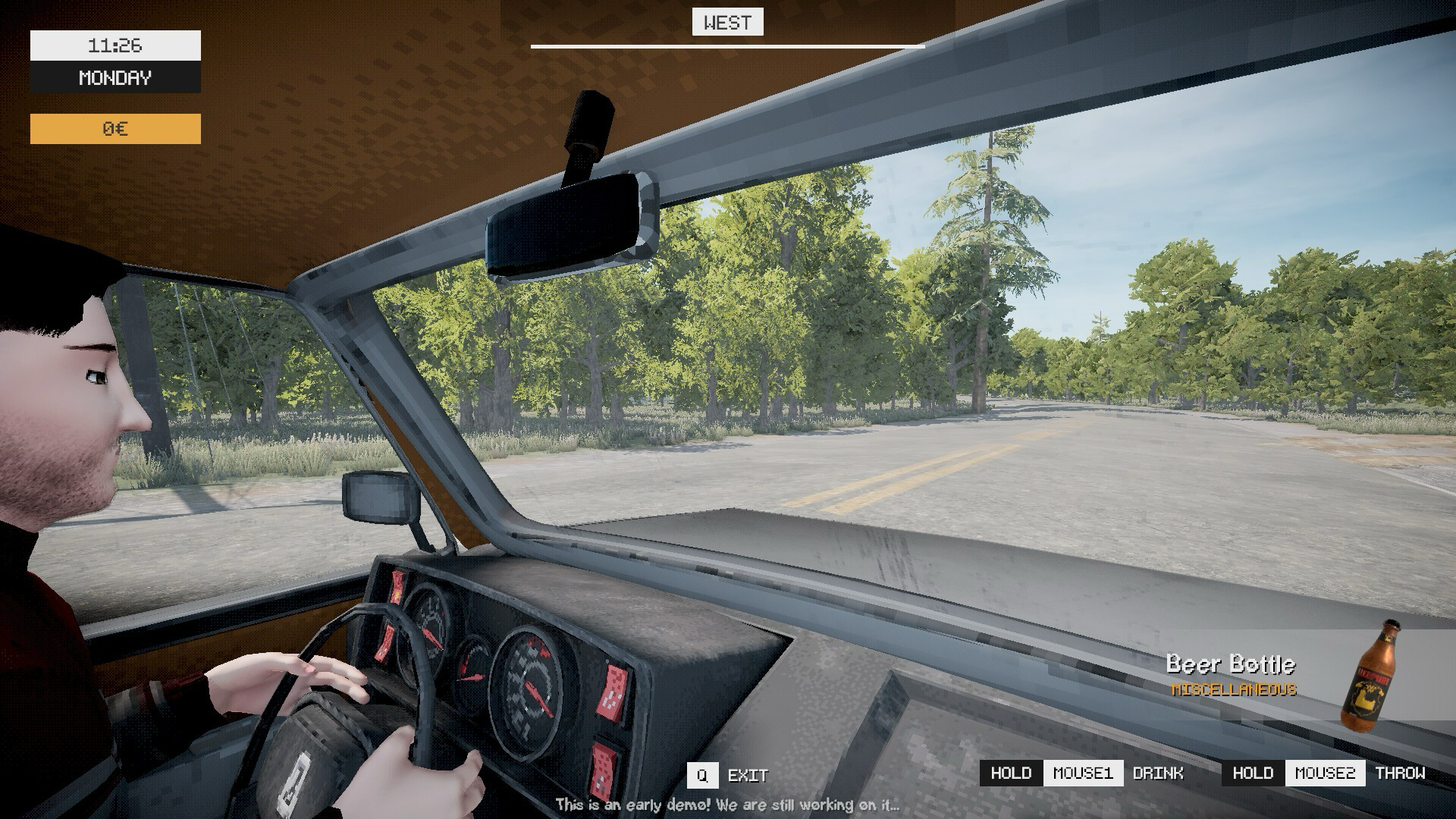
Now there is the financial argument, one of the most commonly cited reasons to build on s&box over established alternatives. The ability to publish standalone games on Steam royalty free sounds attractive. I will be very honest here, this is where me not being part of the Cult of Valve or a disciple of Source might cloud my judgement here. When you do some quick mental maths; Unreal Engine charges nothing until your game earns over a million dollars in revenue. Unity's fees don't kick in until you're generating meaningful income. The financial advantage of building on s&box over mature, well-documented, widely supported engines is essentially zero for any developer not already making serious money and the technical disadvantages are very real right now.
What s&box is asking developers to do is take a significant leap of faith. Build on an engine that isn't finished. Target a platform with a fraction of the player base of its competitors. Master tools that experienced developers are describing as underpowered and underdocumented. Some will take that bet and some of those developers will build something genuinely brilliant, I am stoked to play the games that they make. But the developers most capable of making games that could grow this platform into something meaningful are also the ones with the most options, the most experience, and the clearest view of what they'd be giving up. Right now, s&box is asking a lot and offering relatively little in return. Even then, if those developers do make amazing games... they could just skip the platform entirely if desired to publish to steam.
And when those developers walk away, back to Garry's Mod, to Godot, to Unreal ,they take their games with them. Which brings us to the real problem at the heart of S&box's launch.
The Anti-Corporate Platform With Very Corporate Habits
When discussing this with a friend of mine, they kept bringing up the idea that Facepunch is very Anti-Corporate. I am a skeptic at heart, I find it very hard to believe that any multi-million dollar business doesn't have a capitalist bone in their body, I expect my hyperbole is right but there is a particular kind of trust that Facepunch has built with the Garry's Mod community over the last twenty years. It isn't the polished, PR-managed trust of a publisher with a community team and a social media strategy. It's scrappier than that. Garry Newman has always communicated directly, often bluntly, occasionally controversially. Facepunch has historically been transparent about their finances, open about their mistakes, and genuinely community-first in a way that most studios only pretend to be. For the cult that built itself around Garry's Mod and the Source ecosystem, that authenticity was a core part of the faith. Facepunch were the good guys. The ones who got it.
Which makes what S&box launched with so difficult to square.
Something really stood out to me when I trawled through the reviews, a strange sentiment that the game had a "Crypto Bro" vibe and there was an elaborate "NFT Scam" going on. And honestly, it's not an entirely unfair read. The first thing many players noticed when opening S&box wasn't the game browser or the engine tools. It was the store. Before the platform had proven it had anything worth paying for, S&box already had a cosmetics marketplace stocked with limited time items, skins sold as FOMO exclusives during developer previews that the vast majority of the community couldn't even access.
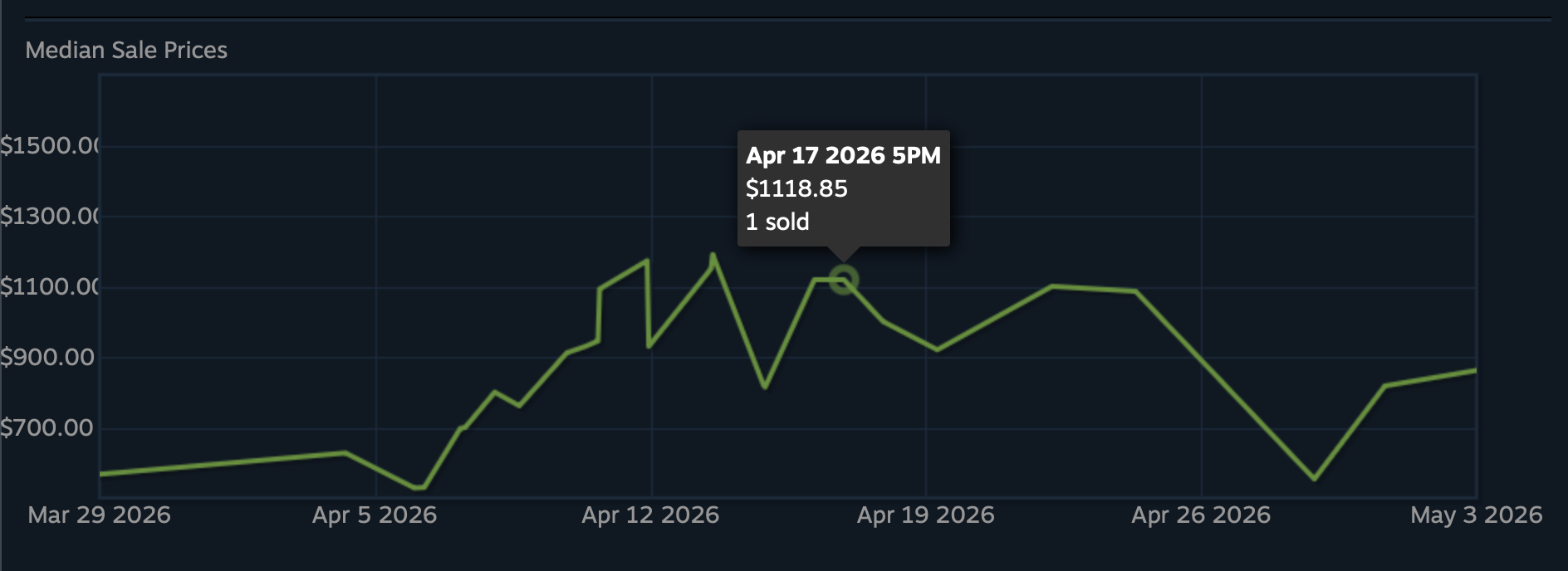
Now logging in today, the most expensive thing I can purchase is roughly £12. The platform makes sure you know it won't be there forever, with a countdown timer keeping a quiet pressure on every visit. Reasonable enough on the surface. But the store is only half the picture. The real intrigue is that on the steam market place where those same cosmetics are being resold for dramatically higher prices. FaceTattoos that are currently listed at roughly £700, and which sold north of £1,000 multiple times in the last month before what appears to be a market dip. A quick reminder if you aren't aware, both Valve and the game's developer get a percentage of every sale on the steam market place. So every time one of those items changes hands at four figures, Facepunch benefit. Whether that was the intention or not, the infrastructure for it was built in from the start, cosmetics sold as limited FOMO items, before the platform had earned the right to sell anything at all.
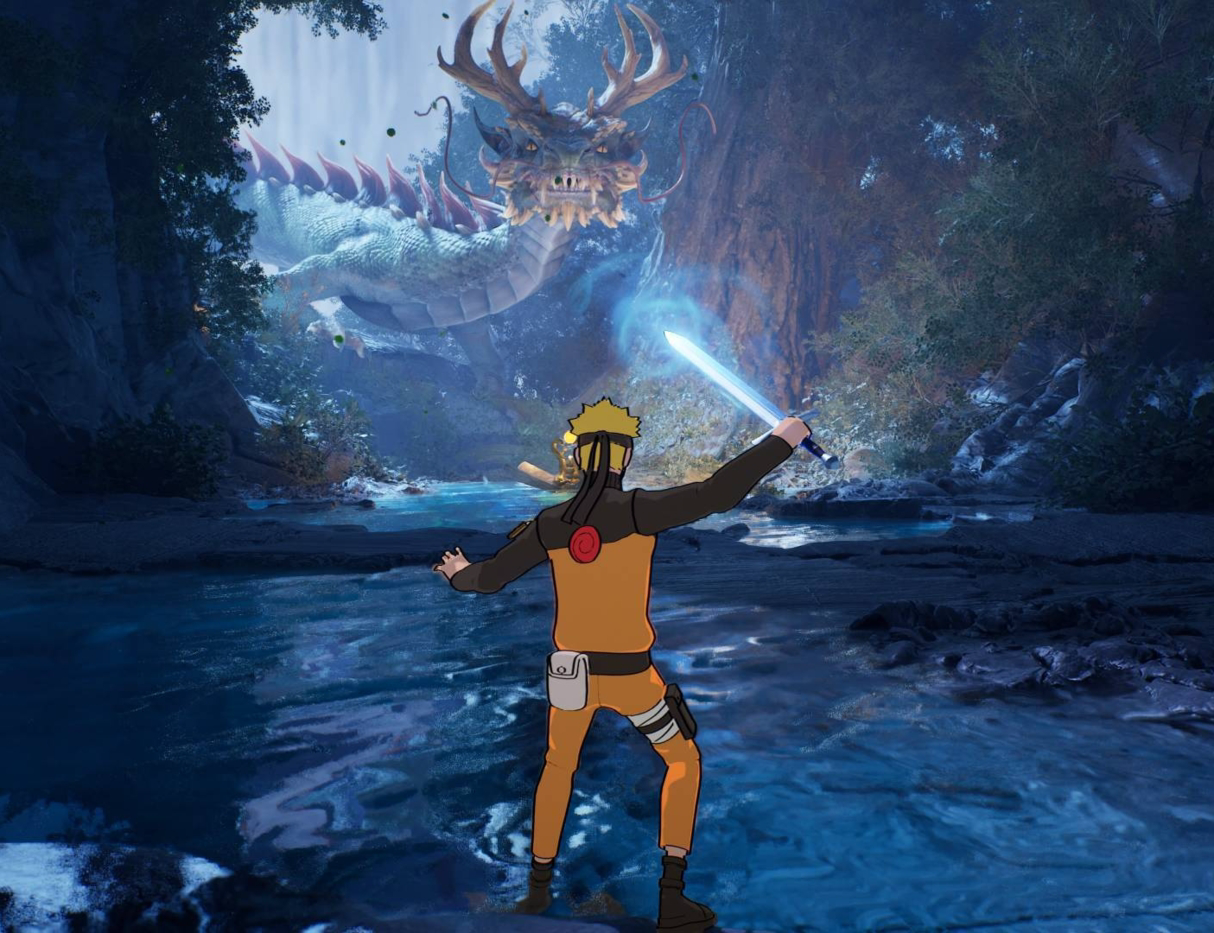
There is one more layer to the cosmetic problem worth noting. On Fortnite, Epic actively enforces rules around how developers can obscure or hide player cosmetics, because they understand that if players can't see their purchases in the games they play, the entire value proposition of buying anything collapses. S&box has no such enforcement. The cosmetics you buy at the store are not carried forward into many games on the platform. Whether developers choose to support them is entirely optional. Right now, in practice, that means you can spend money in the store and then jump into the most popular games on the platform and see nothing you paid for. That is a hard sell and what is more of a concerning thought experiment is whether Facepunch will course correct here, potentially enforcing cosmetic visibility the way Epic does as a way to strengthen the value of their own market. But until they do, the store feels less like a platform feature and more like an afterthought that happens to cost money.
One Steam reviewer described it plainly: it gave off the feeling of a crypto scam. Another, with over 1,300 hours in early access, noted that selling FOMO cosmetics while the platform was still an unstable mess showed exactly where the priorities were. These weren't fringe opinions they were among the most upvoted reviews on the store page.
To be fair to Facepunch, they need to fund the platform somehow. S&box isn't a charity project and cosmetic revenue is a legitimate business model. But there is a significant difference between cosmetics that feel like an optional extra on top of something valuable, and cosmetics that feel like the primary product with a game attached. When players are arriving to find a library of AFK farming experiences and AI generated thumbnails, and the most polished thing on the platform is the skin marketplace, that distinction matters enormously. To me this doesn't feel anti-corporate. It feels like exactly the kind of move that the Garry's Mod community has always prided itself on being above.
Then there is the PlayFund, Facepunch's engagement based developer payout system. The idea is straightforward: a pool of money, now standing at one million dollars a year, distributed to developers based on how much time players spend in their games. Garry Newman announced at launch that the fund was being doubled from its previous amount, framing it as a gesture of faith in the platform's future. On the surface that sounds generous.
An engagement based payout model doesn't reward good games, many UGC detractors will argue that it creates a dangerous dependency. The positive outlook is; if S&box grows, so does the pot. And as the pot gets bigger the incentive to game the system also grows. In other platforms the common meta is to flood the platform with low quality engagement bait from developers chasing a share of an increasingly competitive pool. Then there is the doomer outlook. If S&box doesn't grow, the pot shrinks, developers lose faith and look elsewhere, and the platform enters a spiral it may not recover from. The one million dollar fund sounds significant until you remember that this is a platform competing against Fortnite and Roblox, where the most successful creators earn that in a month. The most popular game on Fortnite right now "Steal the Brainrot" is estimated to make up to $2.4 million in the last month according to fortnite.gg.
Now here I go fighting against my own points here, on the official documentation they are pretty transparent. "Garry's Mod's revenue is funding the development of s&box. So the fund is from Garry's Mod for now. Our hope is that one day s&box will be able to stand on its own two feet, and the fund will grow with its success." and when I read stuff like that and how transparent they are with their finances I get why they have a cult following. Just this time people have started to not tow the party line, internet culture has grown, there is less time for having a complex opinion. More than ever there is people ready to find flaws and get their pitchforks out, so there is a crowd of true believers ready to fight for their cult.
Build it and they will come... Won't They?
There is a fundamental problem at the heart of every new UGC platform, and S&box is walking straight into it with its eyes open. You need players to attract developers. You need developers to attract players. And you need both of them to show up at roughly the same time, in roughly the right ratio, or the whole thing quietly collapses before it ever gets momentum.
S&box launched with a developer community that has had five years to prepare. In theory that's an advantage, games ready to go on day one, a head start on the content problem that kills most new platforms before they begin. In practice, what five years of developer-only access actually produced was a library that reflects exactly the incentives those developers were working under. Small teams, limited resources, an engagement fund that rewards time-spent over quality, and no real player base to build for yet. The result is what you see in the browser today, a lot of early, unfinished, rough-edged projects, a wave of AI generated thumbnails, and a handful of genuinely impressive games that deserve a much bigger audience than they're currently getting.
But here is the brutal reality. At launch, concurrent player counts were sitting under 10,000, first weekend peak was roughly 6,000 to 7,000. For context, Garry's Mod, a twenty year old game that S&box is supposed to be succeeding, regularly pulls more than that. Fortnite runs at over a million concurrent users. Roblox operates at tens of millions. S&box isn't just a smaller platform than its competitors. It's currently smaller than the game it's trying to replace.
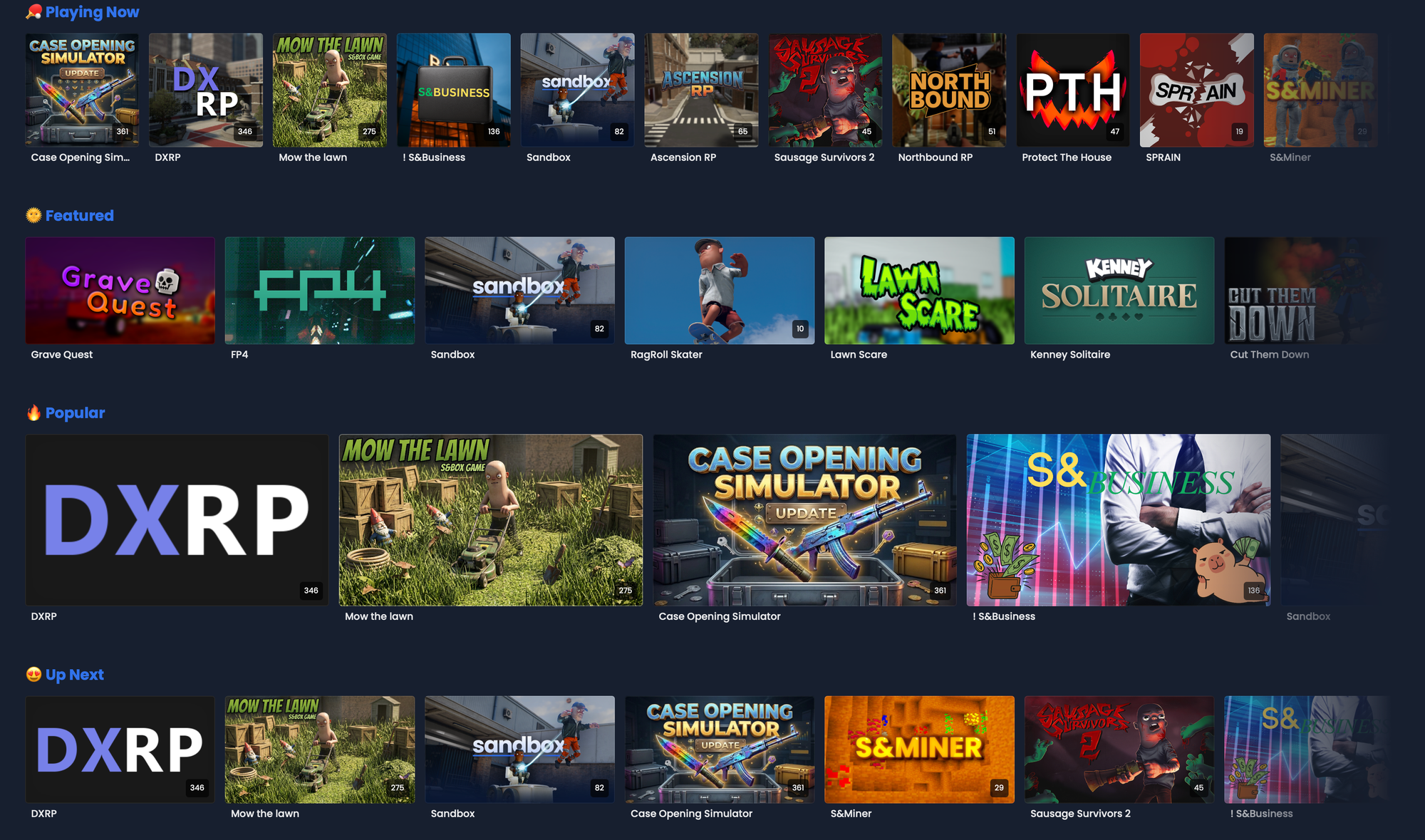
For me, this creates a specific kind of trap for developers. The "Playfund" distributes its payout based on engagement. When you quickly do the maths of the modest number of active games and active developers depending on who you are the numbers get either rather uncomfortable or favourable, very quick. If you have a background of making engagement farming games quickly, you are in for a treat. The developers most likely to build the kind of deep, community-driven experiences that the Garry's Mod audience actually wants are the ones least likely to see a meaningful return on their investment at current player numbers. So the platform's monetisation model is actively selecting for exactly the kind of content that will drive away the audience it most needs.
Then there is the question of where the new players are supposed to come from. Garry's Mod players are the obvious target, but why would a Garry's Mod player leave? They have a platform with thousands of games, a thriving community, and a twenty year catalogue of content, all for a one-time purchase they made years ago. What does S&box offer them that justifies a new $20 buy-in and starting from scratch? Right now the honest answer is: not much. The games aren't there yet. The community hasn't formed yet. The reason to switch doesn't exist yet.
The other candidate is a migration of Roblox developers, the evergrowing pool of creators who are increasingly frustrated with Roblox's discovery algorithm, its subscription requirements for publishing, and a platform they feel they have outgrown". Some of those developers will make the jump to S&box. To them, they are lured by the possibilities of Source 2, releasing on to Steam and being a bigger fish in a less crowded pond. In reality, Roblox developers build Roblox games. Quick, accessible, brightly coloured experiences optimised for short session times to be enjoyed by the TikTok generation. That's not a criticism, it's just what the platform trained them to make. Bring a wave of Roblox developers into S&box and you don't get a Garry's Mod successor. You get a smaller, worse Roblox. Which is the last thing the platform needs and the first thing its core audience will run from.
So who is actually playing S&box right now? My own time across multiple games gave me a pretty clear answer. The voice chat was some of the most unfiltered, chaotic energy I've encountered in years. Young men with absolutely no filter, cycling between hate speech to deeply questionable insults. Something that is akin to an early Xbox 360 party chat if it's been supercharged by the radicalisation of Kick streamers. The type of stuff that would not only get you banned from Roblox and Fortnite but something I feel would be too far in a Counter Strike surf server. It was, in a very specific and slightly alarming way, vaguely familiar. That's the Garry's Mod spirit in its rawest form. After two decades, most of the sane sensible people moved on with their lives and what's left is a culture of chaos, creativity, and complete disregard for anything resembling moderation. Every so often I'd hear a higher pitched child scream down the microphone, something which is rather common on Fortnite. The question is who is the target audience for this platform, is this a platform for that audience or is the aim mass appeal? If the pursuit is a broader, safer more monetisable audience then I am unsure if these two crowds can coexist.
I think S&box really needs a killer app, a game that really strikes the zeitgeist. What TTT and DarkRP were for Garry's Mod, what FiveM has done for GTA and what Blockhaven, Dress to Impress, Grow A Garden, Steal a Brainrot is for Roblox. Something that spreads by word of mouth, building dedicated communities around itself, that gives players a reason to buy into the "platform" and developers a true proof of concept that the platform is worth investing into. That game might be already in development, it could be 6 months away but until it arrives S&box is asking everyone to take it on faith, a currency that has been hit hard by inflation the past two decades.
What's Actually On The Shelf?
With all this talk about S&box, what can you actually play when you download the 20GB install? The honest answer is: a snapshot of exactly the incentive problems we've been talking about this entire article. Let me walk you through some of the games in the top 20 that between them tell the whole story.
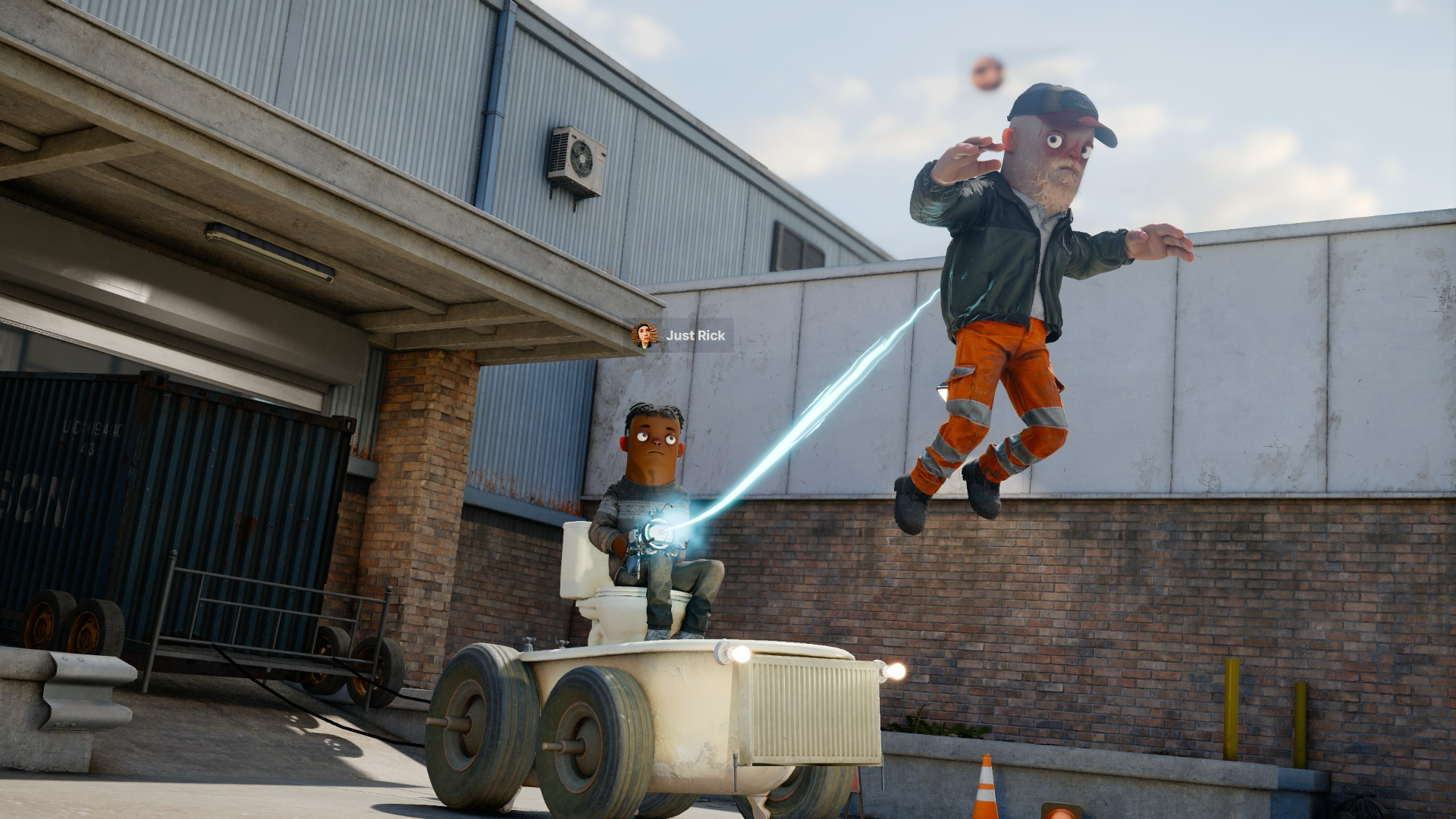
Sandbox is actually the spiritual successor to Garry's Mod's sandbox experience. It's quite strange to see this not be featured as a core mode within S&box, maybe doing so would have quelled some voices in the community. The mode itself is barebones, a few tools, minimal assets with almost nothing to interact. While I struggled to muster up enough creativity to have fun with this, I can concede to say that people with more time and will than me will have a fun time with it.
It's worth noting that this mode is frequently mentioned in the steam reviews, one reviewer described it as an empty husk compared to what was possible in Garry's Mod, and that's hard to argue with. Garry's Mod's sandbox worked because you had the entire Half-Life 2 asset library at your fingertips from day one. Here you have essentially nothing. The spiritual successor to Garry's Mod's most iconic feature launched as a tech demo.
Sausage Survivors 2 is made by Facepunch themselves, and it is comfortably the best thing on the platform right now. A Vampire Survivors style horde survival game; massacre enemies, build perk combinations, survive. It is genuinely fun, well polished, and proof that the engine can produce something worth playing. But if you own any other survivors style game there isn't really anything new to be brought to the table, even more so as the genre has moved on. This being the most popular Facepunch developed game maybe helps detail the engagement focused direction of the platform, Vampire Survivors and it's derivatives are hyper engaging, these types of games have their roots in the gambling game industry, the entire concept of them is to do enough to keep you playing.
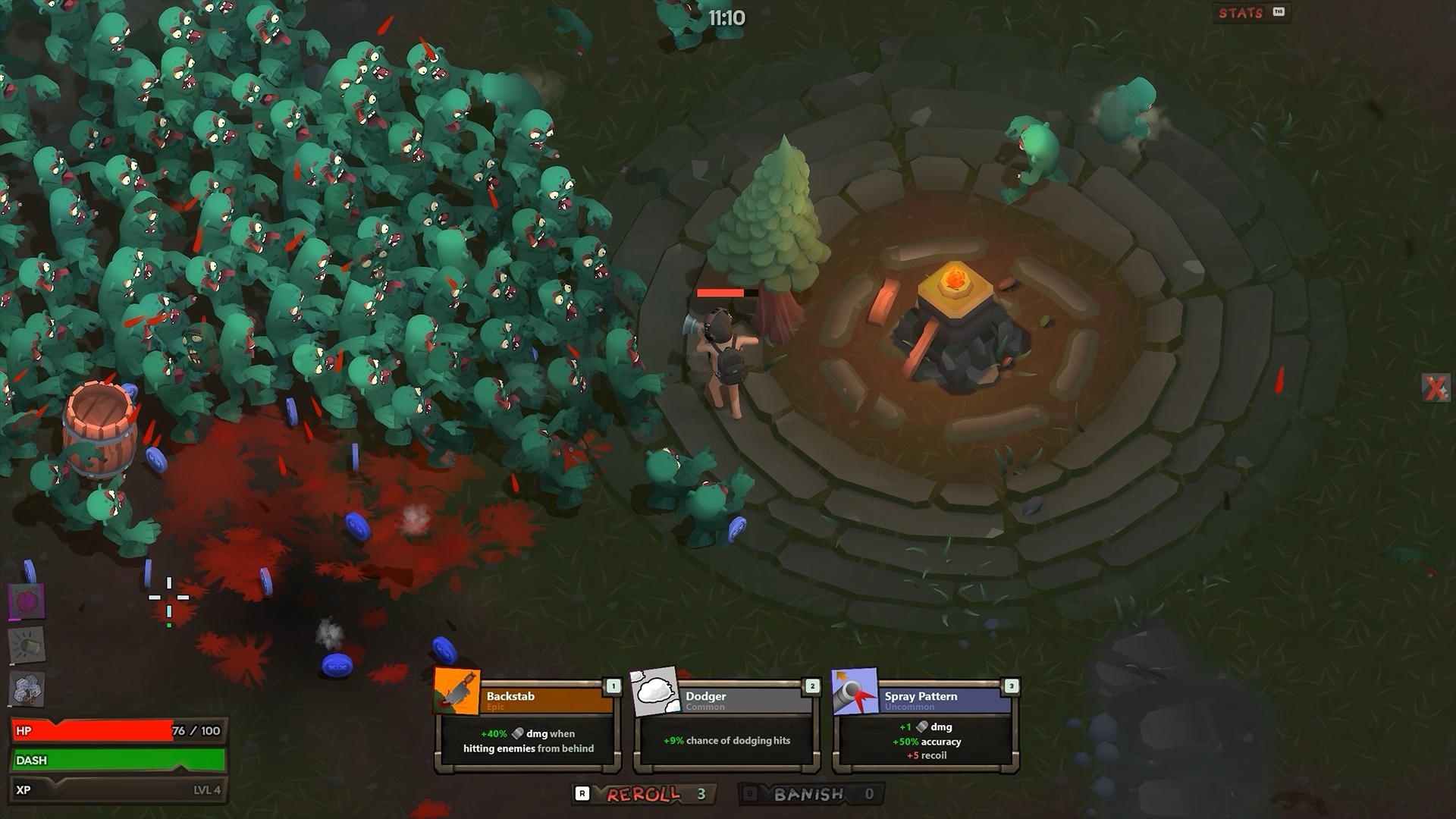
When talking to developers, some shared the concern around the best content on the platform coming from Facepunch themselves, I don't share that fear. Really the platform needs more of this, a showcase of what the tools are capable of and a suite of polished games to bring people onto the platform. They have obviously attempted this as Sausage Survivors 2 is accompanied by Theme Park and Deathmatch. The first being labeled as early access and the latter being cited as fun but with some serious need of polish and performance fixes. To me the concern is that they released the platform with their own games being not ready either.
Ghoul Grounds was the game that caught my eye instantly. The MS Paint art style is genuinely striking and impressive enough I have shown to my peers. It's one of the few games on the platform that has made a deliberate visual identity decision and committed to it fully. The thumbnail doesn't do it justice but at least that stands out in the sea of AI generated thumbnails. Importantly it doesn't use the ugly default S&box sausage character entirely, opting instead for a detailed character with a fully customisation system that actually reflects the game's art direction. That customisation screen is one of the most polished things in the game.
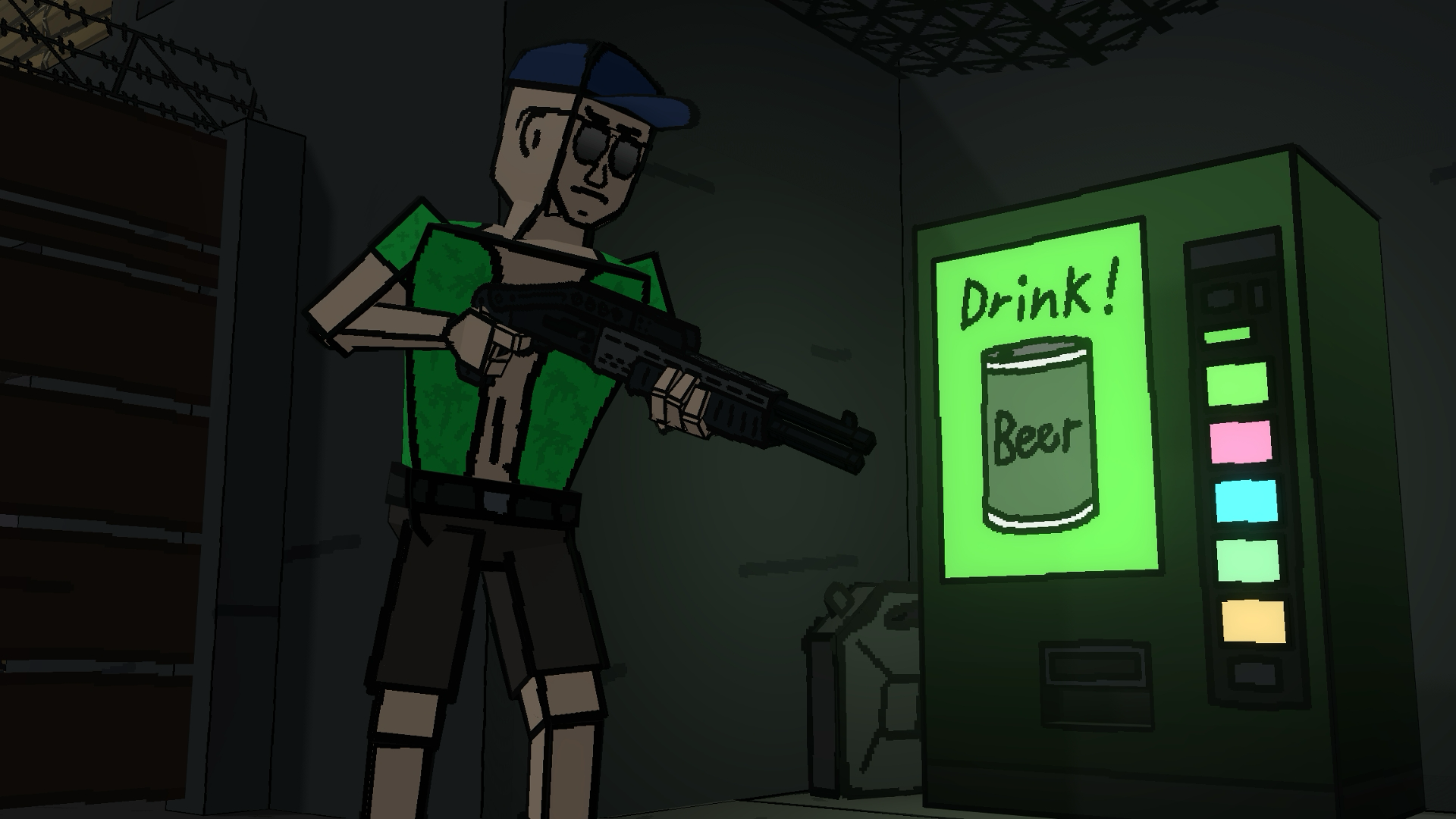
Which makes what happens when you actually start playing all the more deflating. The movement feels sluggish and disorienting, what I assume is reusing the default S&box character controller, as it felt similar to the Case Opening character. The gunplay is serviceable but disjointed, missing basic features you don't notice until they're absent such as hit markers, reactions and ammo management.The game itself is fairly bare, a handful of weapons, a few doors to unlock, the bones of a CoD Zombies experience without the years of iteration that made the original feel tight. While I do think this game is worth playing, I feel it's ironic that the element I talked so much about is the cosmetic layer of this game. It being further along than the gameplay layer may be a reflection of the wider S&box product. Or maybe just the devs prioritising a way to differentiate themselves first over replacing standard systems that is provided to them
At the time of writing Ghoul Grounds has 17 current players, 42.3k total players, 10 minute average playtime
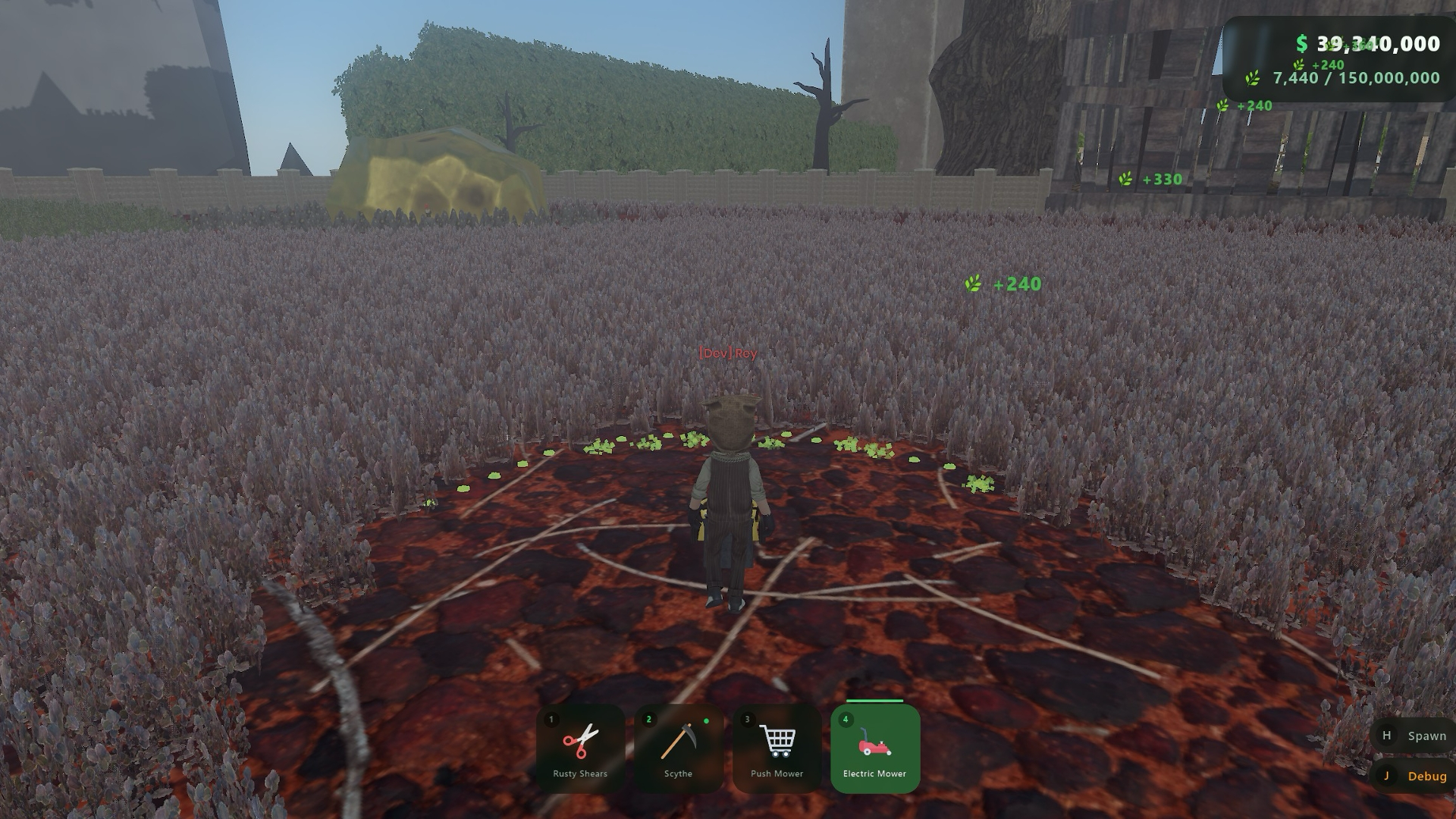
Mow The Lawn is currently one of the most played games on the platform, and it is exactly what it sounds like. You start with a pair of rusty shears, mow grass, sell the grass, buy better equipment, mow more grass. There is a prestige system. There are leaderboards. There are unlockable areas. For players coming from other UGC platforms, this type of game is very familiar. It is a perfectly competent idle progression loop, the kind of game designed not to be played but to be left running. The session timer ticks up. The PlayFund pays out. This is engagement farming in its purest, most transparent form, and the fact that it sits at the top of the charts on launch week tells you everything about what the platform's incentive structure is currently selecting for. To be clear — this isn't a criticism of the developer. They built exactly what the system rewards. That's the problem.At the time of writing Mow The Lawn has 200 active players, 34k total Players, 40 minute average playtime
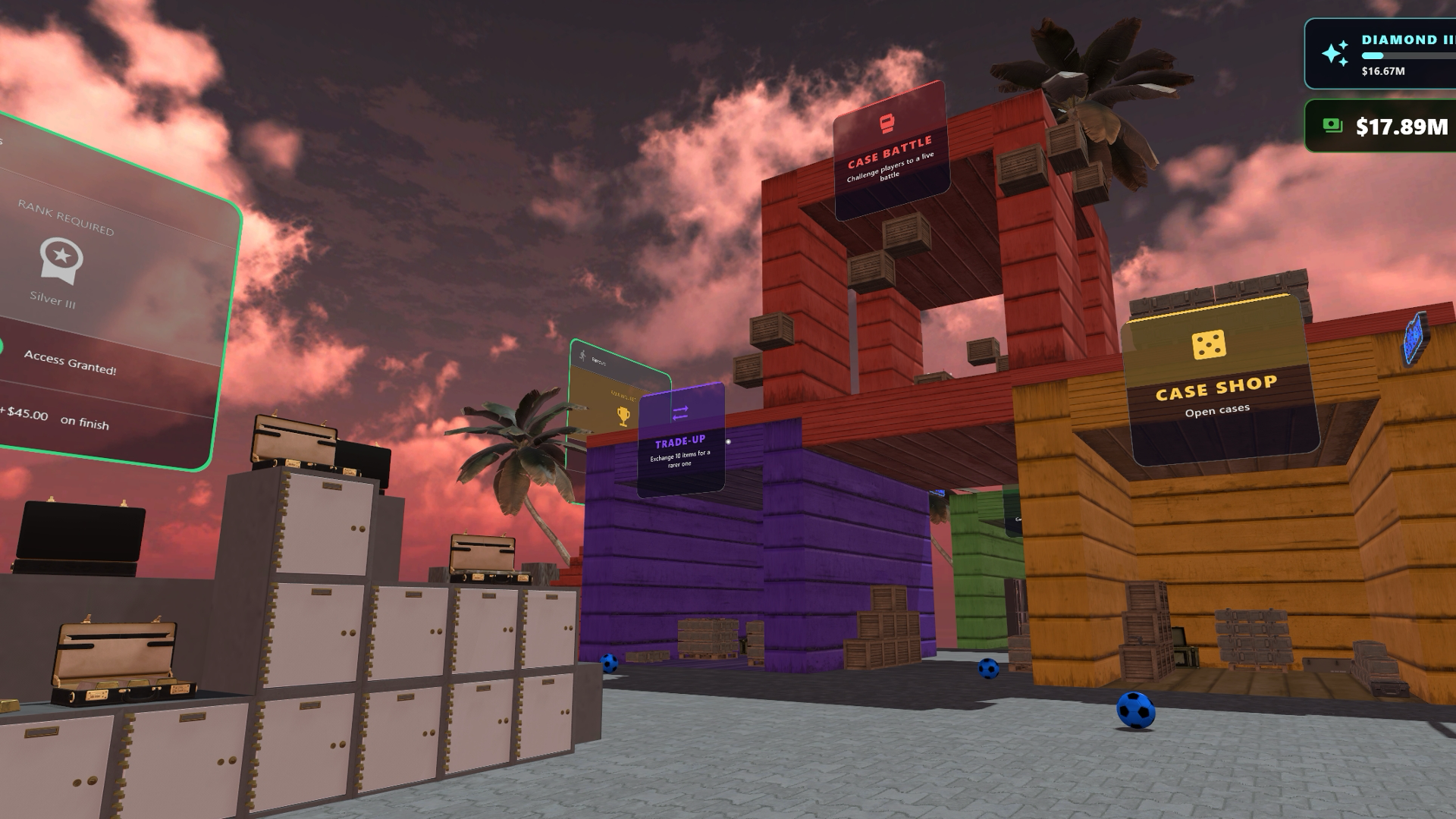
Case Opening Simulator is another top performer, and it is almost breathtaking in its honesty about what it is. You open Counter Strike cases, you then can sell what you get to then open more cases. There is some meta-progression with how you can place your best pulls to generate more money over time, also some very rough parkour if you want to do something while you idle. On a platform that is already facing accusations of having a crypto scam vibe, featuring a case opening simulator prominently in the charts is a strange choice of showcase. It is well made and genuinely slick. I am embarrassed to say this was my most played game. I'm sure this will be a hit with Twitch streamers.
What is worth noting is that this game has been widely suspected by the community of using bots to inflate numbers. Most servers I joined were completely full, rarely ever having less than 62/64 players in all 8 servers it had up, with maybe a handful of people seeming active in what really is another idle game.
At the time of writing Case Opening Simulator has roughly 400 active players, 13.9k Total Players, 43 minute average playtime
If Mow The Lawn represents the engagement farming problem in its purest form, then DXRP represents something much more interesting, and much more telling about what S&box could be if it gets out of its own way.
DXRP is a DarkRP successor. For the uninitiated, DarkRP was one of the defining game modes of Garry's Mod, a freeform roleplay experience set in a virtual city where you could be a criminal, a cop, a mayor, a drug dealer, a gun shop owner, or just someone wandering around causing chaos. It was messy, unbalanced, frequently ridiculous, and utterly captivating. Communities built entire social ecosystems inside it. It was exactly the kind of experience that S&box's marketing promise points toward.
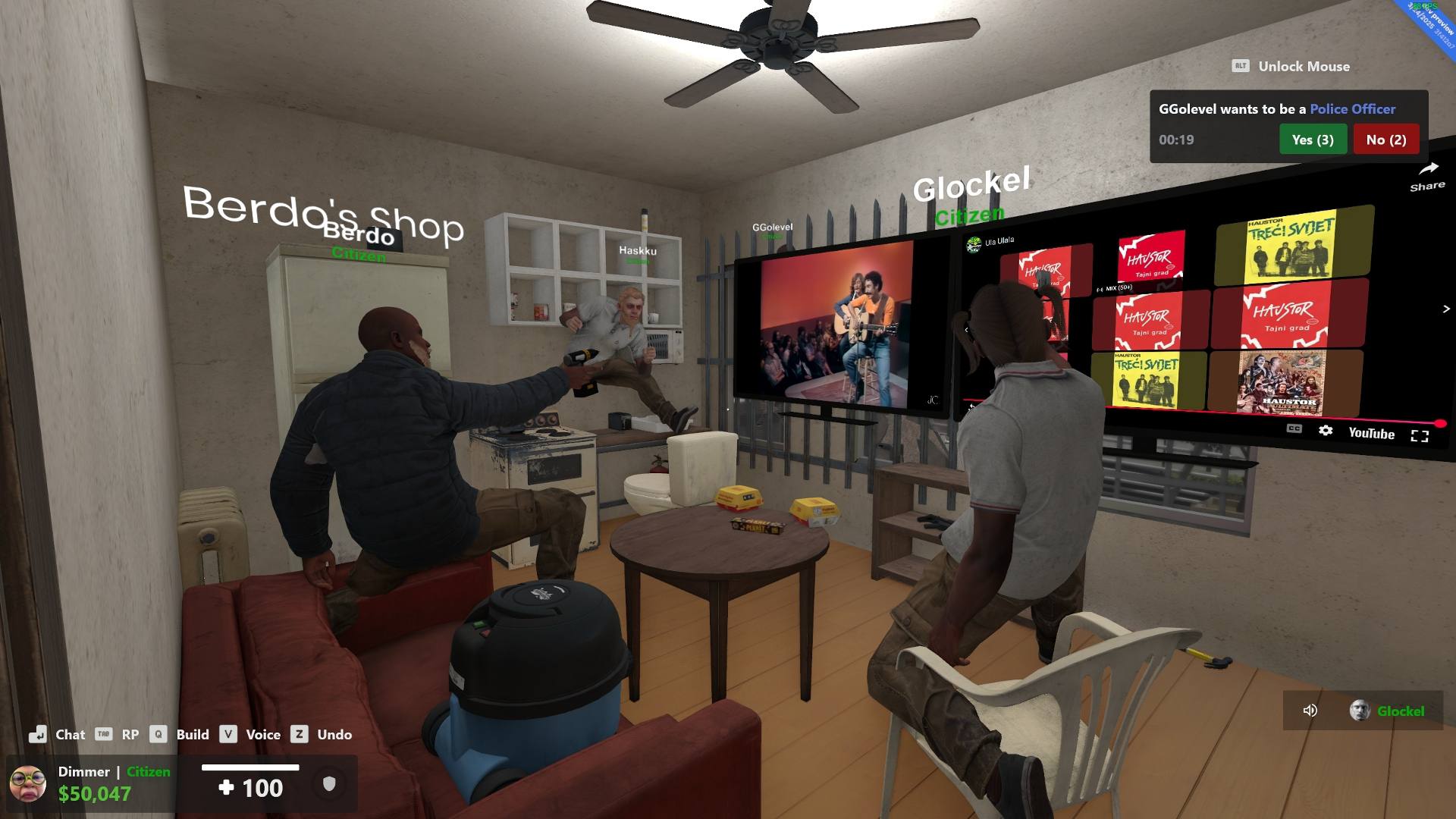
DXRP is still in alpha. It's buggy. Many common features are missing and the developer openly admits this on the game page, this is nothing new for these types of games and RP players will be accustomed to unfinished games. It already has over 3,500 upvotes, nearly 5,000 favourites, and a genuinely active community building around it.
What DXRP exposes is good news, that the game players actually want from S&box is already being built, by a small team, in alpha, with no finished engine beneath them. If they can keep building, and if the platform can give them the player base they need to sustain it, DXRP could be exactly the killer app S&box needs. But that's a lot of ifs for a platform that's asking everyone to be patient while it figures itself out. The biggest issue DXRP, S&box and any other RP game that comes to the platform is that they are competing against RP games in Garry's Mod and now many other platforms.
It's worth noting that, similar to case opening simulator. Many believe that DXRP may possibly be also "manipulating" their numbers. There is zero solid evidence to backup this claim. In my many discussions with developers engrossed within s&box one developer believed that DXRP has had a sizeable portion of the current play fund payout, again no evidence to back this up.
At the time of writing DXRP has 230 active players, 75.9k total players, 36 average playtime.
Before moving on, it's worth briefly mentioning how easy it is to find and play these games. The game section has a few different discovery queues, playing Now, Featured, Popular, UpNext and Up and Coming. I found that each of these mostly just had the same few games over and over again. Selecting a game and then launching into it was pretty simple, games like DXRP and Case Opening Sim work off a dedicated server system where players have to find a server with space within it, where others have what I believe is a listen server style system where players either join public games or create their own session.
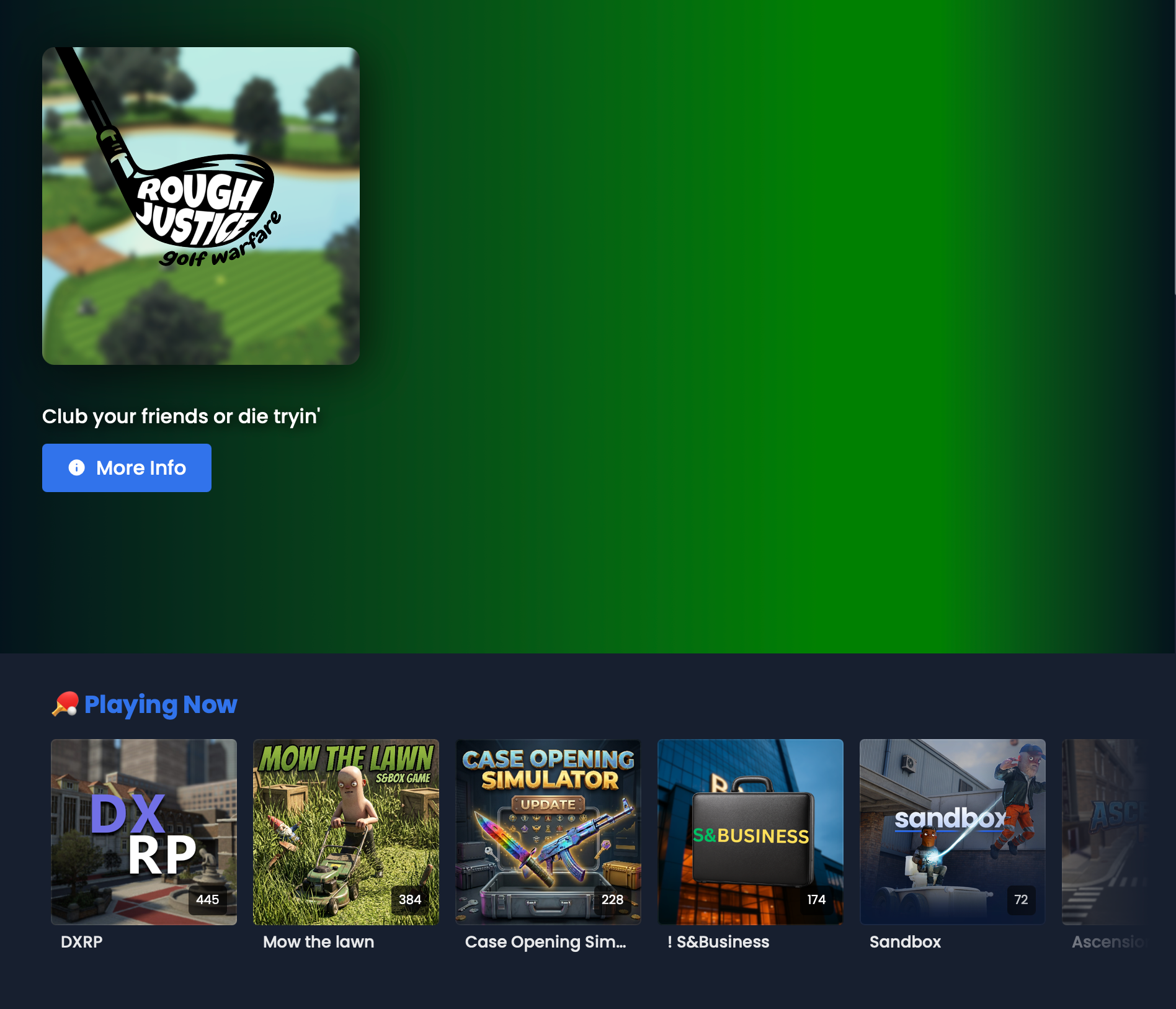
Game size is really worth bringing up, something that I suspect many people will be used to from downloading mods for Arma, FiveM and Garry's Mod. But after playing 4 games I had downloaded nearly 7GB of game files, this was before I tried out DXRP which has a 2.1gb download. I played S&box on both my home 1GB connection and a much slower 10MBs down connection at a friends and the difference was night and day. When playing from a laptop at a friends house, I gave up downloading DXRP as it took too long and I had lost interest in giving a small but enough portion of my laptops SSD to store the game. I can easily see this becoming an issue when more and more large games come to the platform. I've played Garry's Mod RP games with over 20GB of content each.
These games aren't worth writing off, there is obviously some passion and a large amount of potential
"We Knew It Wasn't Ready" — And Charged You Anyway
There is a moment in Facepunch's post-launch communication that has stuck with me more than anything else from this past week. Buried between backend stability updates and roadmap promises was a quiet acknowledgement that landed harder than any of the negative reviews. Facepunch knew S&box wasn't ready at launch. Not a vague "we have lots to improve" deflection. Not the standard early access disclaimer. An actual concession that the product shipped before it should have. It's worth being explicit here, this was not an early access release. There is no early access disclaimer on the Steam store page. This was a full 1.0 launch.
Games launch rough all the time. Publishers push release dates for commercial reasons. The industry has largely normalised it. Importantly this doesn't excuse issues, straight up telling their community that they knew the product was rough and charged everyone $20 for the privilege. To me, this doesn't sit right. The reception was as expected, some people appreciated the transparent, straight talking, "non bull" communication. Others, mostly found on other platforms shared concerns.
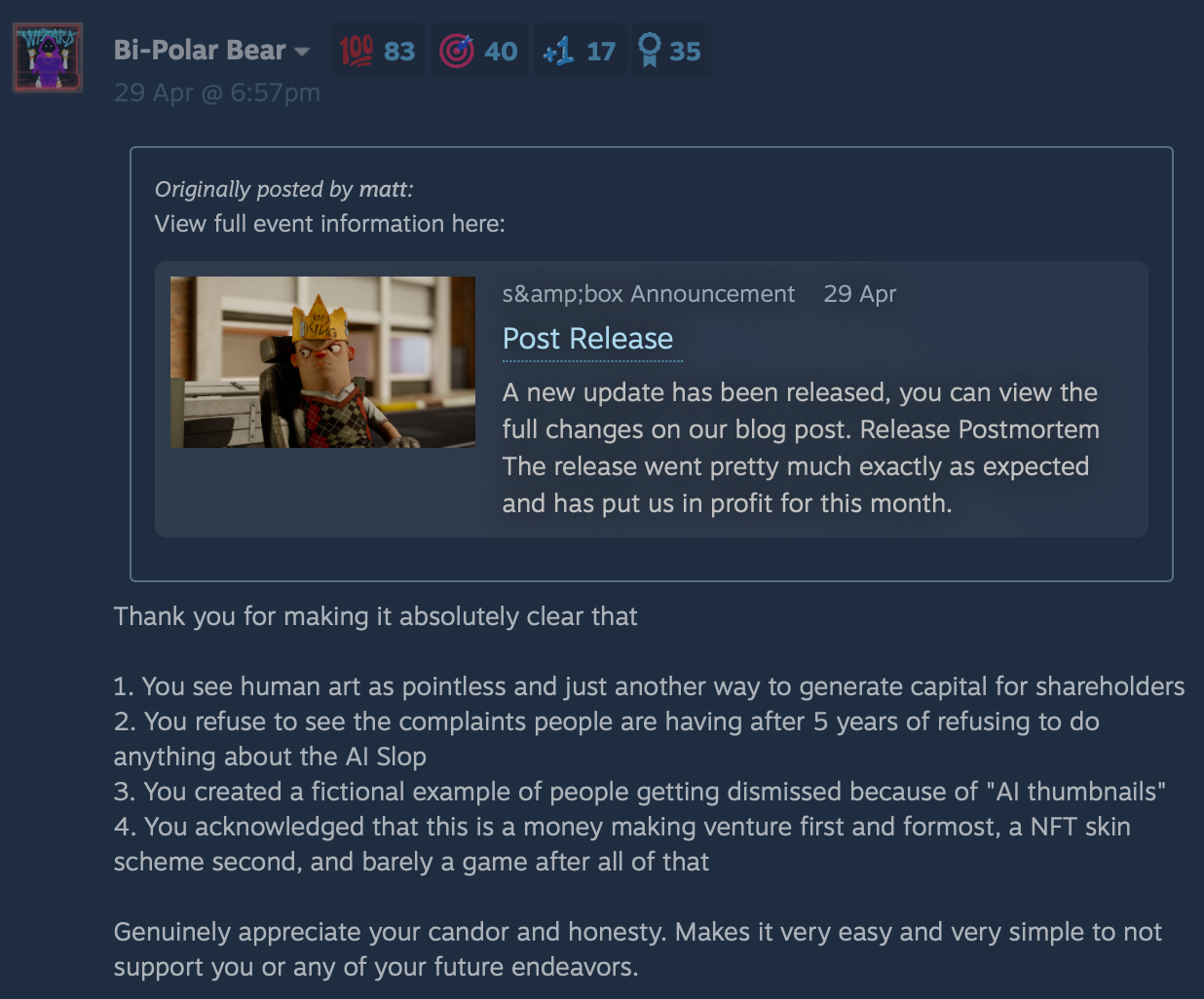
Facepunch summed up people's complaints into three camps, "AI Slop", "Performance" and "This isn't Garry's Mod". While I didn't have any performance issues myself I have heard nothing but issues from both the developers I talked to and players through reviews and comments. Before addressing their own topics, they took time to announce that they were doubling the Playfund to $1million, a smart play really. Instantly change the narrative from "We knew the product wasn't ready" to "Look at how much money we are giving developers"
Their response to "AI Slop" is an unpopular opinion I agree with; AI Slop is thrown around too easily to disregard the hard work developers made to get to a point where a game is playable. Now there are certainly games that are made using AI generated assets and AI generated code, If that is bad then yes... it's AI Slop. Thumbnails on the other hand, Facepunch blames the developers on that side, again understandable but pushing the blame of the featured games on your platform to the developers does leave a bad taste in my mouth. Pandora's box is open, we can't close it again but there is a responsibility to encourage original content, or at minimum offer an option to self-report.
There is a bigger debate on generative AI to be had, it is not for this article. My own opinion of generative AI is : "No one cares about Generative AI until it replaces them."
Improving discovery and player filtering tools would probably be a better answer and they do concede that their discovery algorithm isn't perfect and they are working on it, but what was worth noting is that the wording of " We're not going to put a pointless AI Assistant button for no good reason." does leave the door open for later AI integration. Currently Facepunch's official stance essentially amounted : AI is going to be part of the platform, deal with it. For a developer community that has watched AI generated thumbnails flood the game browser in week one, that answer felt less like transparency and more like a shrug.
The "This isn't Garry's Mod" complaint wasn't really ever expanded upon, which over all was really a smaller issue in my eyes. Over time with the platform expanding this will become a non issue.
I think it was very smart for them to talk about engine performance, my biggest concern has always been that a platform won't be fertile enough to encourage great developers to make great games. There is a showcase about how much data they are getting, clarification on how certain engine feature work and then a cheeky shot at other game engines which I think will get the Source faithful cheering. When reading between the lines I do tend to find a few cracks in their very manicured write up. Such as using RTX3060 as the low performance benchmark, it is true that the RTX3060 is the most popular graphics card on the steam hardware survey currently but their own system requirements has a minimum of a GTX 1060 and a recommended system to have a RTX 2060. While this is a nit pick I would expect any metrics shown about performance to showcase the advertised System Requirement floor.
When combining these responses together I don't feel like core issues are addressed: that Facepunch chose to charge $20 for a product they privately knew wasn't ready, to an audience whose trust they had spent two decades carefully building and releasing in a state that had an entire cosmetic economy ready to go.
The Rust comparison gets made constantly in S&box's defence, and it's worth taking seriously. Rust launched as a "functional" early access game in 2013 and became one of the most successful survival games ever made. Facepunch has proven they can turn a rough launch into something remarkable. That track record is real and it matters. But Rust launched at a time when early access was novel, when expectations were different, and when nobody was calling it the spiritual successor to one of the most beloved games in PC gaming history. The weight of that promise changes the calculus entirely.
What Facepunch needs to demonstrate now isn't that they can fix bugs or improve performance. Those things will happen. What they need to demonstrate is that the decisions being made, on monetisation, on AI, on the engagement fund, on what kind of platform S&box is actually trying to be, are the right ones for the community they're asking to come with them. Because right now, for the first time in a long time, a meaningful portion of that community isn't sure they trust the answer.
So What Now?
It really depends who you are.
If you are reading this as a player who really doesn't care about any of the development side of things. I think you will have already made up your mind. If you had a good time with the games currently on offer; brilliant, keep playing.If you have bounced off it, felt it wasn't ready or feel missold then that is completely valid. Steam refunds are there for a reason and I truly believe in time there will be a game catalogue that will make the purchase worth your money. That could be six months, that could be two years. I genuinely believe there will come a point where something on this platform makes you tell a friend to download it immediately. And if Garry's Mod is still scratching that itch in the meantime, there is absolutely no shame in that.
If you are a solo developer who enjoys the process and thinking about dedicating yourself to the s&box editor. My advice is that Unity or Unreal are still the safer bet for getting started. The documentation is richer, the communities are larger, the tutorials are everywhere, and the path from nothing to something playable is considerably more clearly signposted. S&box will get there, but it isn't there yet.
That said, if you have downloaded S&box, opened the editor, and found yourself genuinely excited by what you see? Keep going. Seriously. The best things ever built on Garry's Mod weren't made by studios with budgets and roadmaps. They were made by people who couldn't stop thinking about the thing they were building. Passion has a way of solving problems that documentation can't. If S&box has lit that spark for you, that matters more than any practical argument about engine maturity. Build the thing. Share it. The platform needs you more than you need it to be finished.
If you are an investor or a studio seriously considering putting real money into developing for S&box, I want to be direct with you in a way that the platform's most enthusiastic advocates perhaps haven't been. This is a riskier bet than it might appear on the surface. The most played game on the platform a week after launch peaked at around 500 concurrent users and has been declining since. Game development is expensive; in time, in money, in talent and S&box offers you no library of art assets to work from, no established audience to tap into, and no guarantee that the platform will grow at a pace that justifies your investment. You will not be riding a wave. You will be helping to create one.
There is also the tooling question. The editor is unfinished. Documentation is sparse. And there is always the possibility, however remote ,that Valve releases native Source 2 tools of their own (it's been 11 years since they announced Source 2 would be free to developers), which would fundamentally change the value proposition of building on S&box's modified version. That may never happen. But it's a risk that doesn't exist when you build on Unity or Unreal. If you can move an established audience from Garry's Mod to S&box cheaply, build something they love, and grow alongside the platform, that's a genuine opportunity. But be clear-eyed about what that means. You won't be benefiting from the platform's momentum. You will be the momentum.
For Facepunch specifically, well I don't think you'd need to take my opinion, but I think the path forward is pretty clear after all the dust is settled. Bigger companies have tried to tackle the Discovery conundrum, you have an editor that allows for much more than UEFN allows and an audience that may currently be more receptive to deeper quality content. Look for ways to move away from engagement metrics for your discovery and compensation to higher quality experiences. Epic both funds projects through their Epic Megagrants and has avenues such as the Epic Picks within Fortnite, these are both used to cultivate and attempt to push creative games that will hopefully raise the platform through the fog of engagement farming. Look for new ways to allow developers to engage their communities and monetise them, this will happen naturally. It's a core pillar of small studios that sprung up over the years making games and servers, get ahead of that and help curate tools to allow developers to feel confident about investing into the platform. Look to bring download sizes down, these game sizes will continue to bloom, other platforms have hard limits on game sizes and also track download times as a metric for discovery. Without saying keep going improving the editor, I personally believe that the platform is mostly a front to keep making the S&box game engine/editor, just invest some more time and money into your documentation, maybe include members of the hardcore community to drive the learning scene. A personal request, try to add handheld support, allowing myself to play with steam deck would have been great. Your own Sausage Survivors 2 would be great on the deck. Allow developers to add a tag to their games saying it's steam deck ready, it might be a fun way to trick devs to consider controller support. Making the leap to console one step easier.
Finally, I think it's time to start considering the communication style that Garry and the wider Facepunch studio defaults to. We are in an era where internet culture moves faster and forgives slower. The straight talking directness felt refreshing fifteen years back but people have moved on and I think if you want the platform to succeed you will need to reach a broader audience. That doesn't mean abandoning it. But it might mean being more thoughtful about when it serves the platform and when it gets in the way.
This Version Of S&box Will Be The Worst It Will Ever Be
Back to the start, I really mean that.
For all the problems I've laid out; the identity crisis, the engagement farming incentives, the unfinished engine, unfinished games, the ready to go cosmetic store. There is more! The low player count, the small play fund, the ugly ass sausage character, the weak discovery platform, I'll stop there. Facepunch has turned this around before and they have a very faithful audience that I do believe would stick with them if they announced they were creating an independent nation and sending missiles to key civilian centres. These are launch week problems on a platform that has, at its core, something to be excited about.
The Garry's Mod community is still here. Battered, sceptical, occasionally furious, but here. DXRP is being built by people who clearly love what they're making. Ghoul Grounds exists because someone had a genuine creative vision and executed it with style. The chaos I heard in voice chat across in DXRP and the Case game; loud, unhinged, mostly illegal and deeply questionable, it's a sound of some form of community forming. It's the beginning and it's real.
What does success look like from here? It looks like a discovery algorithm that surfaces the best games rather than the most engaging ones. It looks like developer tools that stop making experienced developers feel like they've taken a step backwards. It looks like cosmetics that carry forward into every game on the platform, making each purchase feel like an investment rather than a gamble. It looks like a PlayFund that finds a way to reward quality alongside engagement, before the race to the bottom becomes the only race worth running. And most importantly, it looks like that one killer game; the TTT, the DarkRP, the thing nobody saw coming, that makes someone tell their friend they have to download S&box right now.
That game might already be in development. It might be six months away, it might be years before we see it. It might be DXRP when it finally hits its stride, or something nobody has started building yet. Facepunch can't make it happen on their own but they can stop making it harder. Fix the tools. Fix the discovery. Protect the developers who are betting on this platform with their time and their passion. And maybe, just maybe, trust that the community that built Garry's Mod into something nobody expected knows how to do it again.
There is one final thought worth sitting with. Even if S&box the platform fails to find its audience, if the player numbers never materialise, if the PlayFund dries up, if the developers drift back to Garry's Mod, go to Godot or Unreal that doesn't necessarily mean the engine dies with it. Facepunch is a lean studio. They don't need the revenue that a publisher or a platform giant requires to keep the lights on. The tools they have built, the open source C# layer, the modified Source 2 foundation, will continue to evolve quietly regardless of whether the game browser ever reaches critical mass. And here is the thought that I find both fascinating and slightly melancholy S&box's greatest success story might never launch on S&box at all. A developer who cut their teeth on the engine, learned its quirks, built something remarkable, and then published it as a standalone game on Steam entirely on their own terms. Facepunch built the tools. Someone else built the thing that mattered. That wouldn't be the first time that's happened in this industry. And given everything we know about how Garry's Mod came to be, it might be the most Facepunch outcome of all.
Rust was a mess. Then it wasn't. This version of S&box will be the worst it will ever be.